Meet Wil: The Cartoon Zebra with Serious Character
There’s a certain energy that comes with finding a design asset that just clicks. It’s not just about looking good; it’s about having personality, about telling a story before a single word is read. That’s the kind of presence you get with the Cartoon Zebra. Funny African Animal. Wil. At first glance, it’s a charming, illustrated character, but look closer, and you’ll see a versatile design tool with a surprisingly broad range of applications. This isn't just another cute animal graphic; it's a piece of creative font adjacent art designed to inject life and approachability into projects that might otherwise feel too sterile or corporate.
Unpacking the Personality and Visual Appeal of Wil
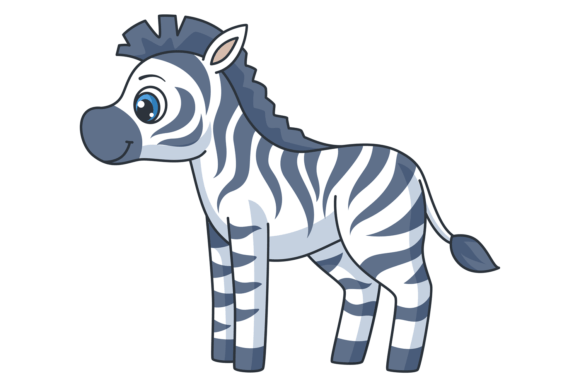
The core of Wil’s appeal lies in its execution. The character is rendered in a style that balances simplicity with expressive detail. The lines are clean and confident, making it scalable and legible even at smaller sizes—a crucial trait for any design asset. The proportions are playful, leaning into a caricature that emphasizes a friendly, slightly mischievous demeanor. This isn’t a photorealistic zebra; it’s an idea of a zebra, distilled into its most engaging form. The transparent PNG and SVG formats are particularly valuable here, allowing the character to be layered seamlessly over backgrounds, patterns, or photographs without awkward white boxes. This flexibility is a game-changer for web design and social media graphics, where assets need to adapt to dynamic layouts.
What truly sets Wil apart is its versatility in tone. It can be the star of a lighthearted brand identity for a children's educational app, or it can serve as a witty mascot for a tech startup looking to soften its image. The character’s expression is open and inviting, which makes it a powerful tool for audience engagement. In a digital landscape crowded with polished but impersonal imagery, a well-drawn character like Wil creates an instant, human connection. It says, “We don’t take ourselves too seriously, but we do take our craft seriously.” That subtle balance is something many premium font families and their accompanying graphics strive for, and Wil nails it.
Strategic Applications: Where Wil Shines Brightest
Let’s talk about real-world use. For entrepreneurs and small business owners, a mascot like Wil can become the cornerstone of a memorable brand identity. Think of a local bakery using Wil on its packaging, website, and loyalty cards. The character builds recognition and warmth, transforming a simple transaction into a branded experience. For marketers, Wil is a secret weapon for content creation. A blog post about workplace productivity, for instance, becomes instantly more shareable when Wil is featured in the header image, peeking in from the side with a curious expression. It stops the scroll. In editorial design, Wil could be a recurring illustration in a column, guiding readers through complex topics with a friendly, visual shorthand.
The applications extend into packaging design and merchandise. Imagine Wil on a line of eco-friendly stationery or a children’s book cover. The character’s inherent humor and charm make it ideal for products aimed at families, educators, or anyone who appreciates a touch of whimsy. For crafters and hobbyists, the EPS and SVG files open up a world of possibility for custom projects—vinyl decals for laptops, iron-on transfers for tote bags, or even stencils for DIY home décor. The key is that Wil is not a passive asset; it’s an active participant in the story your project is trying to tell.
Making Wil Work: Practical Guidance for Your Projects
Integrating a character like this requires some strategic thought. First, consider font pairing. Wil’s playful nature pairs well with typefaces that have a bit of personality without competing for attention. A clean sans serif font for body text can provide excellent readability, while a slightly rounded or handwritten-style script font for headlines can complement Wil’s friendly vibe. Avoid overly ornate or aggressive display fonts that might clash with the character’s approachable style.
Next, think about visual hierarchy. Wil is a strong visual element. Use him to draw the eye to key areas—a call-to-action button, a special offer, or a key piece of information. He shouldn’t be wallpaper; he should be a guide. Test his placement in different layouts. Does he work better as a standalone hero image, or as a smaller icon in a sidebar? The beauty of having multiple file formats is that you can experiment. A transparent PNG is perfect for quick mockups, while an SVG ensures crispness on any screen size for final web implementation.
Finally, remember the importance of consistency. If you use Wil as part of your brand identity, define how and where he appears. Does he always face a certain direction? Is he associated with specific colors or messages? This consistency builds brand recognition and professionalism. While the character is funny, using it haphazardly can dilute its impact. Treat it with the same respect you would a serif font in a formal document—it’s a tool with a specific job to do. By thoughtfully integrating Cartoon Zebra. Funny African Animal. Wil, you’re not just adding a picture; you’re adopting a character that can communicate, connect, and elevate your work in a uniquely memorable way.