Beyond the Party Trick: Using the Balloon Dog Toy in Design
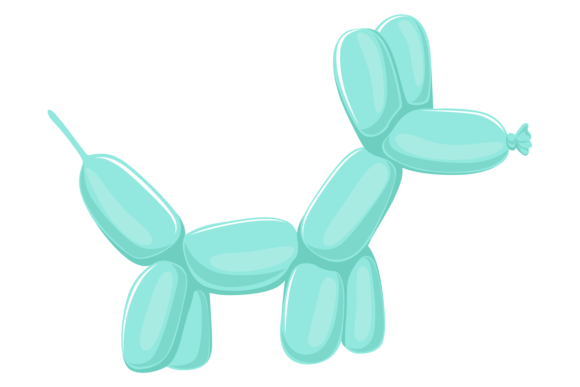
There is a specific kind of nostalgia attached to the Balloon Dog Toy. It immediately conjures images of birthday parties, clowns, and a sense of whimsy that we often leave behind in adulthood. However, in the world of digital assets and modern typography, we are seeing a resurgence of playful elements. I am talking specifically about the Balloon Dog Toy. Inflatable Animal Funny vector set. This isn't just a generic clipart; it is a distinct design asset that captures the glossy, twisted texture of an inflated balloon, isolated perfectly against a white background and available in formats like EPS, JPG, SVG, and transparent PNG.
For designers, marketers, and small business owners, the challenge often lies in finding assets that don't look cheap or overly childish. The Balloon Dog Toy occupies a unique space. It references high art—think of Jeff Koons’ famous sculptures—while maintaining a grounded, accessible humor. When you introduce the Inflatable Animal Funny shape into a brand identity, you are making a statement about approachability. You are telling your audience that your brand doesn't take itself too seriously, but still values quality visual hierarchy and clean vector execution.
Visual Characteristics and Personality
Let’s break down the visual language of the Balloon Dog Toy. The aesthetic is defined by high-gloss surfaces, implied volume, and those signature twisted knots. Unlike a standard sans serif font or a rigid geometric shape, the balloon dog has organic curves. It feels tactile. You can almost feel the rubber resistance if you were to press on the screen. This inflatable animal style brings a 3D element into flat design without needing complex rendering software. It is a funny shape, yes, but it is also surprisingly sophisticated when used correctly.
The personality of this asset is undeniably "pop." It works incredibly well for brands that want to project energy, creativity, and a bit of irony. If your brand identity leans toward the avant-garde or targets a younger, culturally savvy demographic (specifically the 20–50 age range that appreciates design history), this asset is gold. It pairs beautifully with bold typography. Imagine a heavy display font or a rounded script font sitting next to the Balloon Dog Toy. Inflatable Animal Funny illustration. The contrast between the sharp text and the soft, rubbery animal creates immediate visual tension that grabs attention.
Strategic Applications in Branding and Marketing
How do we move this from a "funny image" to a strategic design asset? It comes down to context. For packaging design, particularly in the pet industry, gourmet food, or lifestyle products, the balloon dog is a perfect mascot. It doesn't require the detailed shading of a realistic dog illustration, making it scalable for everything from a favicon to a billboard. Because the asset is isolated on white, it integrates seamlessly into layouts that rely on negative space. This is crucial for editorial design where you need imagery that supports the text without overwhelming it.
In web design, the SVG format is your best friend. It allows the inflatable animal to load instantly and scale infinitely without pixelation. You can use it as a loading animation placeholder or as a recurring motif in your user interface to guide users through a process. For social media graphics, the "funny" aspect cannot be underestimated. Social platforms reward engagement, and a well-placed, whimsical balloon animal can break the monotony of a feed filled with stock photos and corporate headshots. It humanizes the brand.
Furthermore, consider the print market. For crafters and hobbyists, the transparent PNG format is essential. It allows you to layer the Balloon Dog Toy over complex backgrounds for merchandise like T-shirts, mugs, or stickers. The visual appeal is universal; everyone knows what a balloon dog is. It requires no explanation, which is the hallmark of strong logo design and iconography. It is a premium font alternative—meaning it serves the same high-quality purpose as a top-tier typeface but through illustration.
Integrating with Typography and Layout
One of the most common mistakes I see in creative font usage is isolation—treating images and text as separate entities. To get the most out of the Balloon Dog Toy, you need to think about font pairing. Because the balloon dog is playful and rounded, you generally want to avoid overly complex serif fonts or scratchy handwritten fonts that might muddy the visual field. Instead, look for clean sans serif fonts with a bit of weight. A bold, geometric typeface creates a stability that balances the whimsy of the inflatable animal.
Consider the color palette. While the asset is often provided in standard colors, a skilled designer will manipulate the EPS file to match specific brand colors. A neon pink balloon dog against a stark black background creates a very different vibe than a pastel blue dog on cream. This flexibility allows the Balloon Dog Toy. Inflatable Animal Funny to fit into luxury branding just as easily as it fits into a child’s party supply store. It is about the execution.
Practical Guidance for Implementation
If you are a content creator or entrepreneur looking to utilize this asset, here is my advice. First, evaluate the file formats. Ensure you have the vector (EPS or SVG) for any print work or large-scale scaling. Use the PNG for quick digital drops. Second, test the asset's weight in your layout. Because it is a solid shape, it has visual "heaviness." You may need to adjust the kerning or leading of your surrounding text to give the image room to breathe.
Finally, think about the narrative. Why are you using a Balloon Dog Toy? If you are a tech startup, maybe it represents the "inflation" of data or the flexibility of your software. If you are a bakery, maybe it’s just about celebration. The Inflatable Animal Funny vector is a versatile tool, but it needs a story to make sense within a brand identity. Don't just drop it in because it looks cute; use it to reinforce a message of joy, flexibility, or modern art appreciation. When used with intention, this funny little shape becomes a powerful piece of your visual communication strategy.